
Jonathan Livingston Seagull: A Fable of Flight

There are books we read. And then there are books that read us.
When I first opened Jonathan Livingston Seagull by Richard Bach as a young reader, I thought I was simply reading a short story about a bird that loved to fly. What I didn’t realize at the time was that I was reading a quiet manifesto about courage, individuality, and the pursuit of something greater than acceptance.
Years later, while scrolling online, I came across a post by Gregg Braden that said:
“Stories shape who we are - they inspire, awaken, and remind us of our deeper potential.”
And instantly, my mind flew back to Jonathan.
The Seagull Who Refused to Fly for Bread
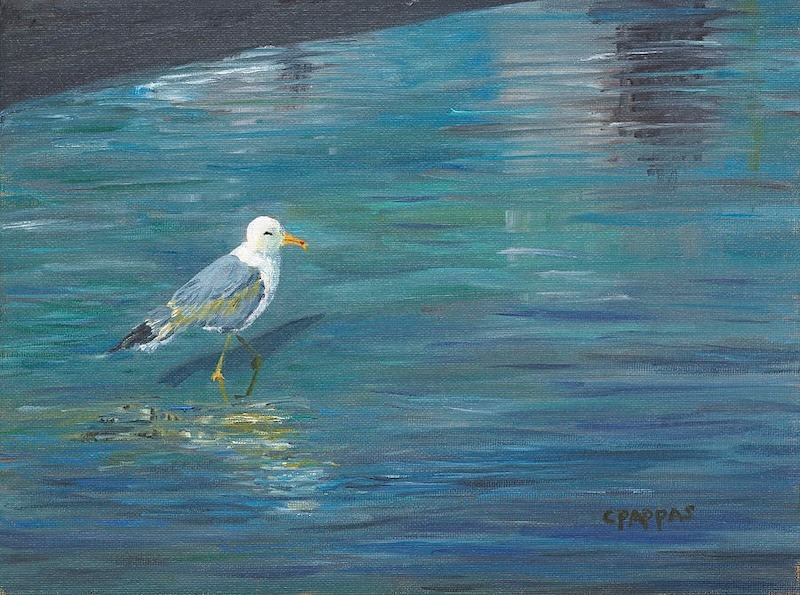
In Bach’s story, most seagulls fly only to eat. Flight is simply a tool for survival. But Jonathan Livingston Seagull is different. He flies because he loves it. Because it means something.
While the flock is satisfied with routine and safety, Jonathan becomes obsessed with mastering flight itself - speed, precision, grace. Not for applause. Not for recognition.
But because somewhere deep inside, he feels that flying could be more. That small idea is the spark of the entire story. And perhaps, the spark of many human lives too.
The Quiet Cost of Being Different

Jonathan’s pursuit comes with a cost. His experiments make the flock uncomfortable. His curiosity threatens tradition. Eventually, he is cast out.
Exiled.
That moment struck me deeply when I first read the book, because it reveals a universal truth: The moment you begin chasing a purpose beyond the ordinary, you may temporarily walk alone Innovation looks like rebellion at first. Curiosity can look like defiance. Growth can look like arrogance to those who fear change.
But Jonathan keeps flying. Not to prove them wrong. But to prove something to himself.
Mastery Is a Spiritual Journey

As Jonathan continues his journey, he discovers that flying is more than technique. It becomes a metaphor for growth, awareness, and freedom.
He learns that limits are often illusions we inherit from others.
We are told what is possible.
We are told what is practical.
We are told where our ceiling is.
Jonathan asks a radical question: What if the ceiling isn’t real?
Every new maneuver he learns is not just a physical achievement—it’s an expansion of awareness and that idea stayed with me long after I closed the book.
The Moment That Changed Everything

One of the most powerful parts of the story happens when Jonathan returns to the flock that once rejected him. He doesn’t return with bitterness. He returns with compassion. Instead of proving he was right, he teaches others how to fly beyond their limits too.
That moment transformed the story from one of personal ambition into something far deeper: purpose.
True mastery is not just about reaching your highest potential. It’s about helping others discover theirs.
Why This Story Still Matters
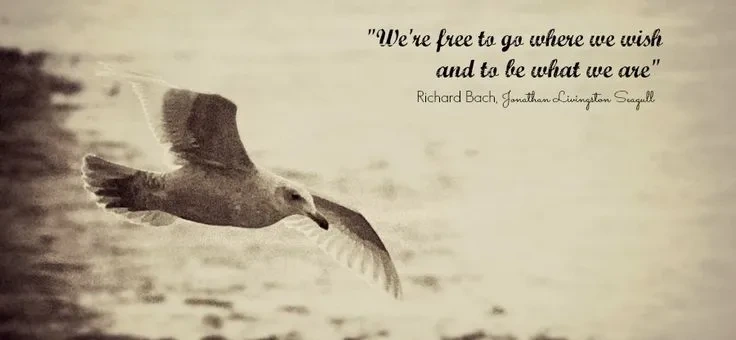
We live in a world that constantly pushes us toward conformity:
Choose the safe path. Stay within expectations. Don’t question the flock.
But stories like Jonathan Livingston Seagull remind us that the most meaningful lives often begin where comfort ends. The people who change the world rarely begin by fitting in.
They begin by asking:
What more is possible?
And then they keep flying until they find out.
A Question Worth Asking
Every reader eventually realizes something profound:
Jonathan isn’t really a seagull.
He’s an idea.
He represents the part of all of us that wants to grow beyond routine, beyond fear, beyond invisible limits.
The part that whispers:
You were meant for more.
Maybe that “more” isn’t fame, or success, or recognition.
Maybe it’s simply becoming the fullest version of yourself.
Flying a little higher.
Seeing a little farther.
Living a little freer.
So, if you ever find yourself feeling out of place because you’re chasing something deeper than what the flock expects…
Remember Jonathan.
And keep flying.
3 months ago
Comments
Follow The GodFather
By submitting, you agree to our Terms and Privacy Policy